Summary: Today's blog title is a bit of a misnomer. The fact is, there are many words featured in this week's WOW segment—and they all surround the word birth and its origins (fittingly).
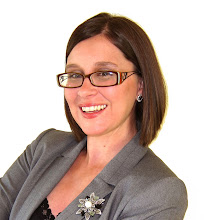
Happy birthday to me! Today I turn 30-something (*ahem*). And as the rest of the world concentrates on what's really important—a vision of peace as personified in our collective memory by Dr. Martin Luther King, Jr.—I thought I'd get a little narcissistic. (And, yes, even my MLK link is self-absorbed: My sister is a teacher at the very impressive MLK Dream Montessori School.) So, my blog is about all things birth-related.
In addition to recognizing the late Dr. King's birthday, today I personally have recognized: my aunt's birthday; my great uncle's birthday (hey, people like to give birth on this date in my family); the birthdays of a couple of other friends (also today); and the upcoming or recently-past birthdays of several other friends, family members and even my in-laws. I know a lot of January birthdays! And *psssst!* today is also the First Lady's birthday, in case you hadn't heard. Happy birthday to all of us!
So, now that we've cut the cake and blown out the candles (hopefully, not in that order), let's get down to our WOW word study.
BIRTH (BERTH) - as a verb, it's the action of bringing someone or something to life—as in, "In her career, the midwife was responsible for helping to birth more than a hundred healthy babies." As a noun, it's the moment/place when that act occurs: "1776 marked the birth of a nation." More esoterically, it's the state resulting from being born at a particular time and place, or having to do with one's lineage, i.e., "He was a Southerner by birth," and "His was not a noble birth." Finally, as an adjective, it describes anything having to do with the forms of birth already mentioned, like "the clinic's best birthing room" and "the prevention of birth defects." Birthday is a compound word—but I've blogged about that before.
The word birth entered the English language in the mid-13th century, deriving from the Old Norse, byrth, which mutated through many forms from an ancient Indo-European word, bhrto, meaning to bear. Interestingly, birth replaced the Old English word gebyrd, which derived from German and had a broader definition, expanding to offspring, descent, race, nature and even fate. In the 1600s, another compound word, birthnight, existed to specify the night of someone's birth.
Here are a couple of synonyms—with histories that are just as interesting—for you to look up on your own (now that we've given birth to your curiosity, you may as well continue to grow): nativity, geniture, nascency, natality, genesis ... Are you seeing a pattern already?
I'd like to give you some final food for thought: Why do we recognize Dr. King's birthday instead of holding a day of memorial for his tragic passing? Perhaps it's because we want to focus on positivity, just like he did with his message of hope. Here's to the birth of a better tomorrow today ...
© KiKi Productions, Inc. 2010
Showing posts with label American Sign Language. Show all posts
Showing posts with label American Sign Language. Show all posts
Jan 17, 2011

Sep 14, 2009
WEEKLY UPDATE: A Different Kind of Body Language
Last weekend, I attended a conference that addressed several areas of interest and importance to me. One additional area of focus was a pleasant surprise:
I was intrigued to watch sign language interpreters throughout every conference presentation, including the smaller breakout sessions. Particularly fascinating were the highly animated interpretations of a stand-up comedy performance (with more than half a dozen comedians) and a moving one-woman show by writer, actor, and mental health advocate Victoria Maxwell.
The comics made sure to include one-liners about "working with a partner" onstage, and even held a dialogue of sorts with the interpreters, whose hands flew in a flurry of interpretation of each joke. (One comedian, having just delivered a punch line with the word wedgie, turned to the signer and asked, "So, what's wedgie in sign language?" Improvising right along with him, she interpreted the joke by quickly spelling out w-e-d-g-i-e as she translated, then—delivering a wonderful visual punchline of her own—signed the word in answer to the question by pantomiming a yanking up of underwear and a comedic pained expression to the laughter and applause of the audience.) During Maxwell's show, the interpreters worked just as hard at providing emotion through facial expressions and accompanying body language—gesticulating wildly and quickly to indicate the times when she was portraying herself in a manic state; slowing to a calmer speed and 'tone of voice' to indicate some emotional normalcy; even slumping shoulders, staring blankly, and signing very slowly during the actor's portrayal of depression.
Sign language has its own set of rules that changes and evolves with time, just like any other language. I noticed new signs this weekend for terms like man, woman, and boy that were different from those used when I was a girl, signing haltingly with my deaf cousin. Click the link for a list of Google books on American Sign Language linguistics to learn more about the other English language today.
© KiKi Productions, Inc. 2009
I was intrigued to watch sign language interpreters throughout every conference presentation, including the smaller breakout sessions. Particularly fascinating were the highly animated interpretations of a stand-up comedy performance (with more than half a dozen comedians) and a moving one-woman show by writer, actor, and mental health advocate Victoria Maxwell.
The comics made sure to include one-liners about "working with a partner" onstage, and even held a dialogue of sorts with the interpreters, whose hands flew in a flurry of interpretation of each joke. (One comedian, having just delivered a punch line with the word wedgie, turned to the signer and asked, "So, what's wedgie in sign language?" Improvising right along with him, she interpreted the joke by quickly spelling out w-e-d-g-i-e as she translated, then—delivering a wonderful visual punchline of her own—signed the word in answer to the question by pantomiming a yanking up of underwear and a comedic pained expression to the laughter and applause of the audience.) During Maxwell's show, the interpreters worked just as hard at providing emotion through facial expressions and accompanying body language—gesticulating wildly and quickly to indicate the times when she was portraying herself in a manic state; slowing to a calmer speed and 'tone of voice' to indicate some emotional normalcy; even slumping shoulders, staring blankly, and signing very slowly during the actor's portrayal of depression.
Sign language has its own set of rules that changes and evolves with time, just like any other language. I noticed new signs this weekend for terms like man, woman, and boy that were different from those used when I was a girl, signing haltingly with my deaf cousin. Click the link for a list of Google books on American Sign Language linguistics to learn more about the other English language today.
© KiKi Productions, Inc. 2009
Subscribe to:
Posts (Atom)